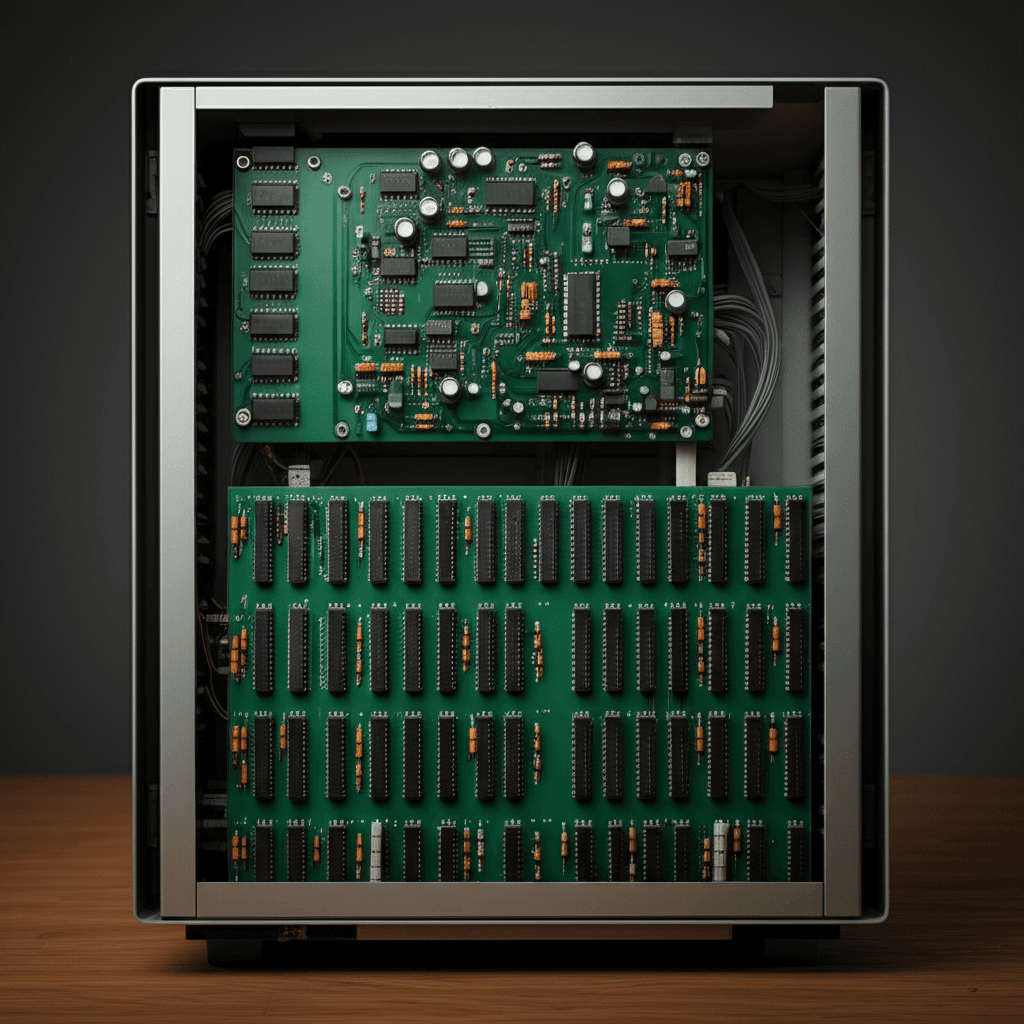
The Rise of Balanced Ternary Computing: A Breakthrough Beyond Binary
In the vast landscape of computing paradigms lies a fascinating alternative to conventional binary systems: balanced ternary computing. This approach uses three discrete values (−1, 0, +1) rather than the traditional binary digits (0 and 1). While binary computing dominates modern technology due to historical compatibility with transistor-based hardware, ternary systems offer compelling mathematical and operational advantages that deserve renewed attention.
Why Look Beyond Binary Systems?
Binary computing emerged as the standard largely because early transistors reliably maintained two distinct states. However, this doesn’t mean binary is mathematically or physically optimal for all computational tasks. Balanced ternary systems solve several critical limitations:
• Compact numerical representation: Ternary encoding requires 16-20% fewer digits than binary for equivalent integer ranges.
• Native negative number handling: Negative values are directly represented without complex workarounds like two’s complement.
• Enhanced mathematical efficiency: Base 3 systems demonstrate superior alignment with fundamental constants like Euler’s number (e).
• Quantum computing potential: Emerging research suggests qutrits (ternary quantum bits) may outperform binary qubits for specific quantum operations.
The Setun Computer: Soviet Ternary Innovation
During the late 1950s, Soviet computer scientists developed the world’s first operational ternary computer: the Setun. Named after a Moscow river, this revolutionary machine used balanced ternary logic implemented through magnetic amplifiers and rotating components. The project demonstrated remarkable success in educational and scientific applications until political pressures prematurely halted its development in the 1960s.
Technical Architecture and Legacy
The original Setun computer featured:
• 27-trit memory words with parallel processing
• A modified ternary operator set including balanced arithmetic
• Magnetic drum memory storage
• Eight specialized registers
Though only 50 units were produced, Setun’s historical significance lies in proving ternary computing’s real-world viability decades before modern researchers revisited the concept.
Modern Setun Simulation: Educational Powerhouse
A functional JavaScript simulator now breathes new life into Setun’s architecture, enabling students and researchers to explore ternary computing concepts through an interactive browser-based interface. This educational tool replicates:
• Core ternary arithmetic units
• Memory management systems
• Instruction processing workflows
• Input/output interactions
The simulation demonstrates practical advantages including more efficient division/multiplication operations and streamlined signed integer handling compared to binary implementations.
Key Simulator Features
Users can experiment with:
• Real-time trit manipulation (−, 0, +)
• Ternary logic gate visualization
• Comparative binary vs. ternary calculations
• Historical programming examples
• Error detection mechanisms
Mathematical Superiority of Balanced Ternary
Balanced ternary computing offers fundamental mathematical benefits confirmed through extensive academic research:
1. Optimal Range Representation: Each additional trit increases representational capacity by a factor of 3 versus binary’s factor of 2.
2. Symmetric Value Handling: The equidistant −1, 0, +1 values eliminate signed zero complications.
3. Computational Efficiency: Certain matrix operations demonstrate 15-20% speed improvements in ternary implementations.
4. Error Reduction: The balanced nature reduces rounding errors in critical financial calculations.
Future Implications: Ternary Computing’s Second Dawn
As conventional binary computing approaches physical limitations, ternary systems are experiencing renewed interest across multiple domains:
• Quantum Computing: Qutrit-based systems show promise for enhanced quantum state superposition
• Neuromorphic Chips: Ternary logic better approximates biological neural activation patterns
• Low-Power Devices: Reduced transistor activity in ternary encoding could extend battery life
• AI Accelerators: Ternary networks demonstrate potential for more efficient machine learning models
While the Setun computer remains a historical artifact, modern simulations and research demonstrate balanced ternary computing’s enduring relevance. As we push against the boundaries of binary computation, this nearly-forgotten Soviet innovation may hold unexpected keys to future technological breakthroughs.


Leave a Reply