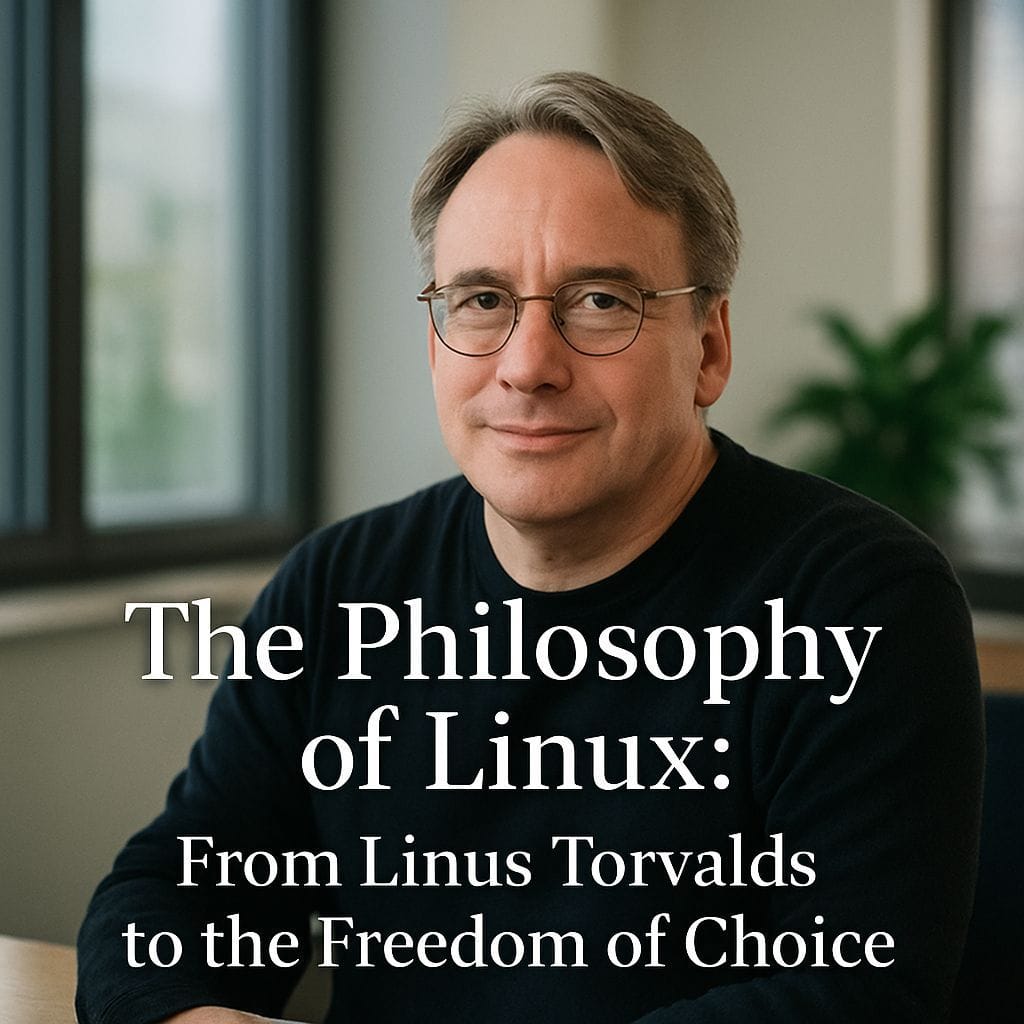
Life is filled with profound questions that keep us awake at night. Does a higher power exist? What is our purpose in the universe? Is there life on other planets? While these existential inquiries are significant, they often pale in comparison to the specific, paralyzing dilemma faced by a computer enthusiast standing on the precipice of open-source technology: Which Linux distribution should I use?
For those stepping into the world of Linux for the first time, this question is not merely technical; it is philosophical. To understand the gravity of this choice, we must look at how most of us were introduced to computing. The vast majority of personal computer users begin their digital journey with Microsoft Windows. Whether our parents introduced us to Windows 98, we grew up with Windows 7, or the current generation is navigating Windows 11, the experience is singular. The operating system is pre-determined, a “one-size-fits-all” solution handed down by a corporate entity. We were never asked to think about the operating system; it was simply there. Abandoning this singularity for Linux introduces a concept foreign to many commercial OS users: absolute freedom of choice.
The Beauty within the Chaos of 600 Distributions
To an outsider, the existence of over six hundred active Linux distributions might look like fragmentation or chaos. However, this apparent disorder is grounded in a robust philosophy of liberty. Unlike the ecosystems created by tech giants like Microsoft or Apple, which function as “walled gardens” designed to keep users within a specific workflow, Linux grants the user total autonomy. This is the core tenet of the Linux philosophy.
This freedom means that the operating system adapts to you, rather than you adapting to the operating system. Among the hundreds of distributions, there is one perfectly tailored for every distinct need:
- For privacy advocates: Distributions like Tails or Qubes OS offer military-grade security.
- For creatives: Ubuntu Studio or Fedora Design Suite come pre-loaded with artistic tools.
- For minimalists: Arch Linux or Alpine Linux allow you to build your system brick by brick.
- For ethical hackers: Kali Linux provides a complete arsenal of penetration testing tools.
To truly appreciate this branching tree of possibilities, we must return to the root. We must visit the “zero point” of this digital revolution: the moment Linux was born.
1991: The Disruptor named Linus Torvalds
The year was 1991. The setting was the University of Helsinki, where a computer science student named Linus Torvalds was about to change the world, driven largely by curiosity and frustration. At the time, Linus was deeply fascinated by computer hardware, specifically the Intel 80386 processor. He wanted to understand the inner workings of his machine at a fundamental level, but he faced a significant hurdle: the software available to him.
Linus was using MINIX, an operating system created by Andrew S. Tanenbaum for educational purposes. MINIX was a UNIX-like system designed to teach students about operating system architecture. While it was an excellent teaching tool, it came with heavy restrictions. It was not free for commercial use, and more importantly to Linus, its source code was limited in how it could be modified or expanded upon. It was a tool for learning, not for production or unrestrained experimentation.
Frustrated by these commercial and functional limitations, Linus decided to write his own terminal emulator to access the university’s UNIX servers. This project quickly spiraled into something much larger. He wasn’t trying to build a global phenomenon; he simply wanted an operating system that allowed him to utilize the full capabilities of his 386 hardware without the licensing shackles of MINIX. On August 25, 1991, he sent a now-famous message to the comp.os.minix newsgroup, stating he was doing a “free operating system (just a hobby, won’t be big and professional like gnu).”
The Legacy of Open Source
That “hobby” project grew into the Linux kernel. By combining his kernel with the GNU tools developed by Richard Stallman and the Free Software Foundation, a fully free and open operating system was born. This history explains the modern landscape of Linux. It was born out of a desire to break free from restrictions. Today, that philosophy lives on in every distribution. Whether you choose Debian for its stability, Manjaro for its cutting-edge updates, or Linux Mint for its ease of use, you are participating in a decades-long tradition of digital sovereignty. The chaos of choice is not a bug; it is the primary feature.


Leave a Reply