Introduction
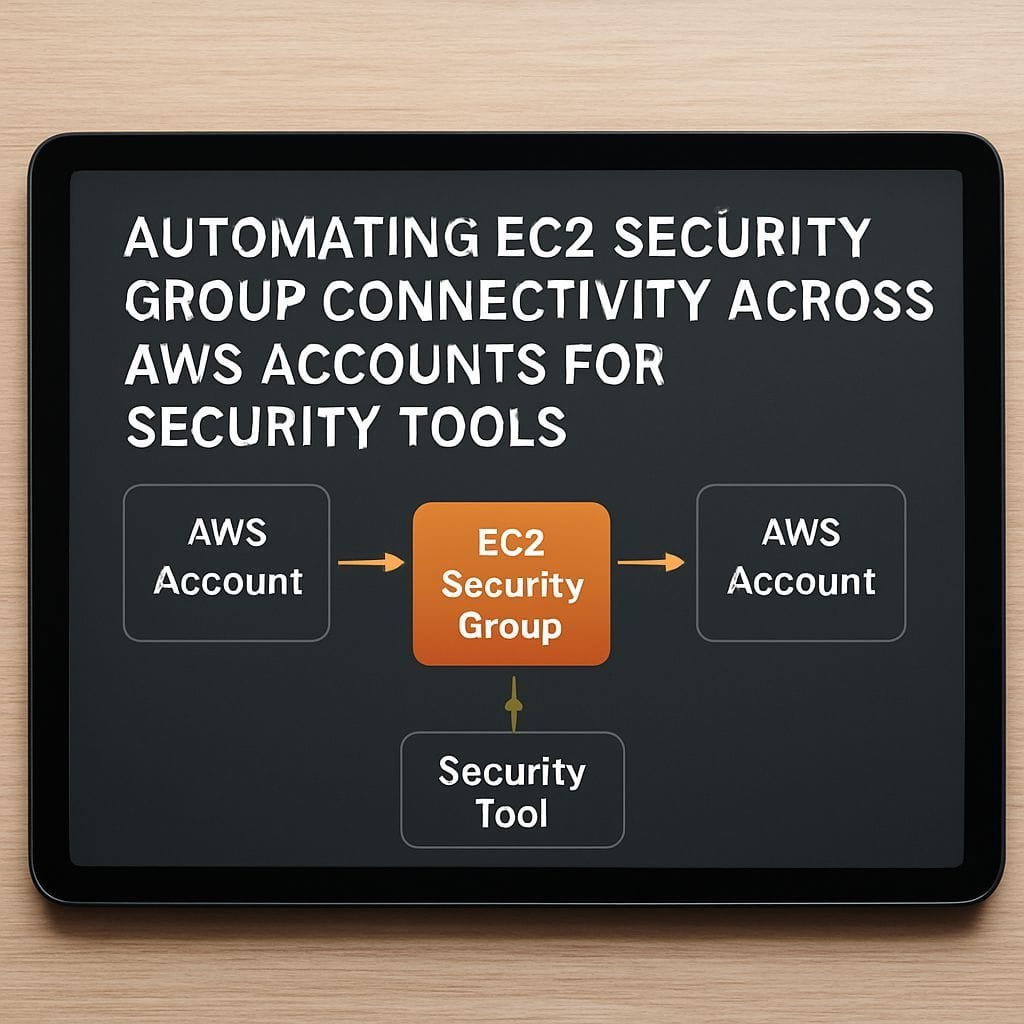
Ensuring reliable network connectivity for security tools to Amazon EC2 instances across many AWS accounts and regions is a common operational requirement for large organizations. Without consistent inbound rules in EC2 security groups, vulnerability scanners, privileged access management tools, and configuration assessment agents cannot perform authenticated scans, session management, or system hardening verification. Manual management of security group rules becomes impractical as account and regional scale increases.
Common Challenges
Slow onboarding: Manual configuration of security group rules for each newly launched EC2 instance delays tool rollout.
Operational fragility: Accidental removal of an allow rule causes immediate loss of visibility or access for a security tool.
Lack of scalability: Maintaining scanner IP lists and per-account changes does not scale across dozens or hundreds of accounts.
Audit and compliance gaps: Inconsistent rules increase risk and create evidence gaps for audits.
Objective and Requirements
The objective is to guarantee automated, auditable, and centrally manageable network access for approved security tools to EC2 instances across all AWS accounts and regions. Key requirements include:
Automatic coverage for new resources
Operational scalability
Auto remediation if rules are removed or altered
Centralized management and auditing across AWS Organizations
Recommended Architecture
A resilient and scalable architecture typically combines centralized policy and decentralized enforcement using native AWS services. The core components include:
Central security account that holds policy definitions, approved security tool network ranges, and automation artifacts.
Infrastructure as code (CloudFormation StackSets or Terraform) to deploy standard security group templates and tag enforcement across accounts.
AWS Config rules to detect noncompliant security group rules or missing tags.
EventBridge and Lambda or AWS Systems Manager Automation to perform automated remediation when noncompliance is detected.
Cross-account roles and least privilege IAM policies to allow the central automation to remediate resources in member accounts.
Optional network services such as AWS PrivateLink, VPC peering, or Transit Gateway for secure cross-account connectivity when access cannot be expressed as IP allow lists.
Implementation Steps
Define a canonical security group template for each security tool with required ports, protocols, and source identifiers. Use tags to mark these security groups as managed.
Publish approved CIDR lists or prefix lists in the central account. Keep the list up to date and reference it from security group templates to avoid hard-coded IPs.
Deploy templates via StackSets to ensure consistent security groups and tag policies across accounts and regions.
Create AWS Config rules that validate security groups against the canonical template and detect deviations or missing managed security groups.
Automate remediation using EventBridge or Config remediation to invoke Lambda functions or SSM Automation documents that restore approved rules or reattach managed security groups.
Use cross-account IAM roles with narrowly scoped permissions so central automation can act in member accounts without granting broad access.
Document exceptions and an approval workflow for cases where temporary deviations are required. Log approvals for audit purposes.
Best Practices
Principle of least privilege for network rules and IAM roles.
Prefer agentless secure channels such as PrivateLink or SSM Session Manager instead of opening public SSH or RDP when possible.
Use managed prefix lists or a centralized CIDR source to reduce operational churn when scanner IP ranges change.
Tagging and naming conventions for managed security groups to make detection and remediation deterministic.
Test remediation workflows in isolated accounts before enterprise rollout and maintain runbooks for incident response.
Monitoring, Auditing, and Compliance
Auditability is critical for continuous compliance. Enable CloudTrail, aggregate AWS Config and CloudWatch logs centrally, and forward findings to Security Hub or a SIEM. Configure alerts for repeated remediation events and generate periodic compliance reports for stakeholders. Maintain a change history for security group modifications and remediation actions for audit evidence.
Conclusion
Automating security group connectivity for EC2 across AWS accounts requires a combination of central policy, infrastructure as code, continuous detection, and automated remediation. When implemented with least privilege, robust auditing, and optional PrivateLink or VPC-based connectivity, the approach scales to hundreds of accounts and regions while preserving tool availability and compliance posture.


Leave a Reply