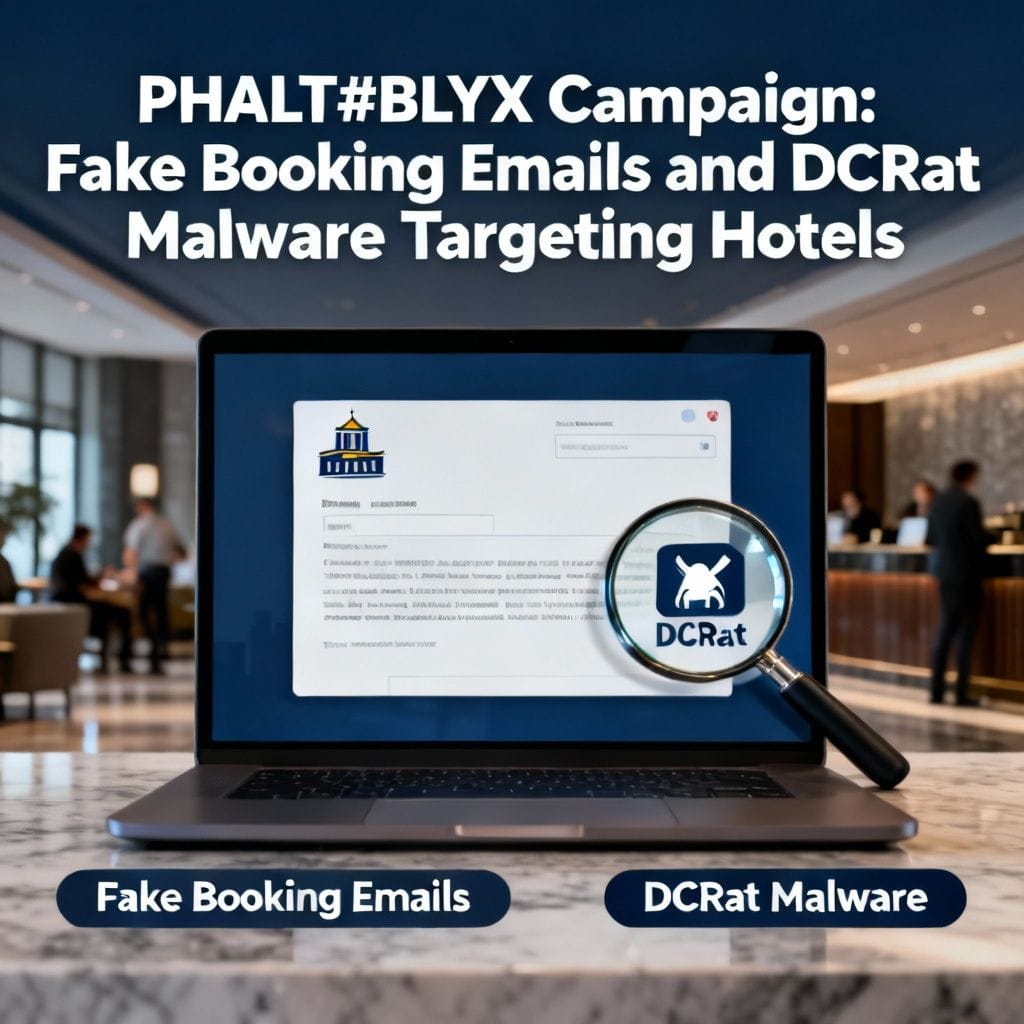
The hospitality sector is facing a sophisticated new threat that blends social engineering with convincing technical deception. A campaign tracked as PHALT#BLYX is targeting hotel staff with fake booking-related emails. These messages lure victims into applying a ‘fix’ for a fake blue screen of death error. This click-fix style lure ultimately installs a remote access trojan known as DCRat.
This is a clear evolution of social engineering. Attackers are not just asking for credentials. They are guiding users through a performance of troubleshooting that results in a malware infection. For hotel operators and IT teams, understanding this workflow is essential for defense.
## What is the PHALT#BLYX Attack Chain?
The attack begins with a phishing email disguised as a hotel booking notification. Staff are told there is an issue with a reservation. The email instructs them to copy and run a command to fix a BSoD-like error on their screen. This creates urgency and uses a trusted Windows repair pattern to bypass skepticism.
Once the user runs the command, usually a PowerShell or similar script, the infection chain starts. The script removes security checks, sets up persistence, and drops the DCRat payload.
## Why This Campaign Is Effective
### ClickFix Lures
ClickFix-style attacks are rising because they exploit the user’s desire to solve a problem. Instead of downloading a suspicious file, the user feels in control by running a fix. This behavior is harder for traditional email filters to block.
### Targeting Hospitality
Hospitality staff are fast-moving and handle high volumes of email. Booking lures fit naturally into their workflow. This increases the chance of a click and a paste into a terminal.
### DCRat Capabilities
DCRat is a modular remote access trojan. Once installed, it can:
– Steal credentials and session tokens
– Log keystrokes
– Capture screenshots
– Execute commands and deploy additional tools
– Provide persistent access for lateral movement
## Key Indicators and Tactics
While specifics vary, the chain typically follows these steps:
1. Email with booking urgency and a request to run a command for a fix
2. Execution of a script that disables security controls
3. Download of DCRat modules
4. Contact with command and control infrastructure
5. Exfiltration and follow-on activity
## How to Defend Against PHALT#BLYX
### User Awareness
Train staff to recognize urgent requests to copy and paste commands. Emphasize that legitimate support will never ask for manual code execution.
### Policy and Configuration
– Block or alert on PowerShell and similar interpreters in high risk roles
– Restrict execution from temporary folders and the clipboard
– Use application allowlisting to prevent unauthorized binaries
– Enforce least privilege for front desk and booking systems
### Monitoring and Detection
Monitor for unusual parent-child process relationships. Look for mass deletes, shadow copy removal, or suspicious registry persistence. Alert on outbound connections to unknown domains after a booking email spike.
### Incident Response
If a suspected infection occurs:
– Isolate the device immediately
– Disable the account and reset passwords
– Capture memory and disk for forensics
– Review logs for additional compromised hosts
## The Bigger Picture
The PHALT#BLYX campaign illustrates how attackers blend legitimate-looking email, user-driven remediation, and proven malware like DCRat. Hotel operators should treat booking emails with the same caution as payment requests. With strong controls on scripting, user training, and vigilant monitoring, teams can break the chain before the rat gets in.
Leave a Reply