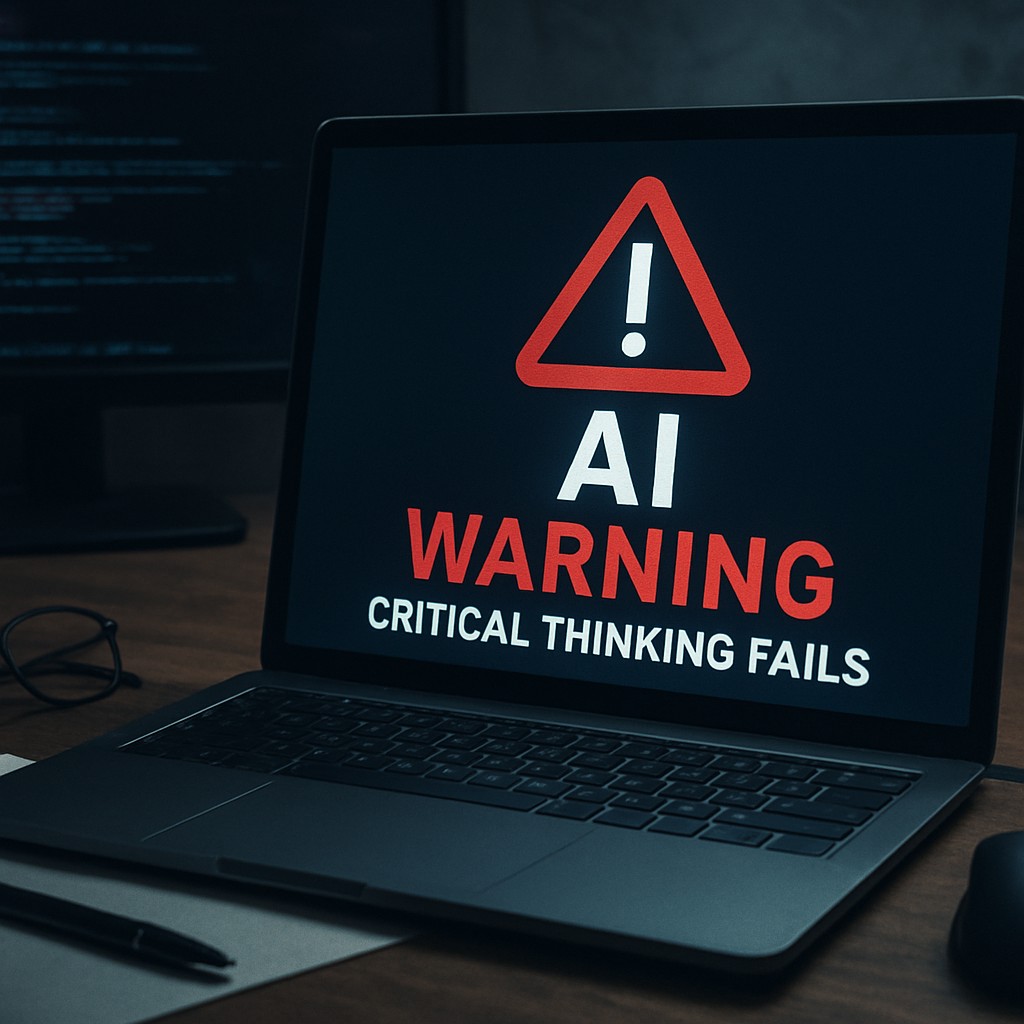
AI is rapidly changing software development workflows. Code generation, debugging assistance, documentation drafting, and workflow automation are becoming routine. However, the bigger shift is not the disappearance of developers. The bigger shift is the redistribution of value toward people who can think clearly, define the right problem, and make safe technical decisions.
In practice, the highest risk is weak thinking. Strong AI can execute tasks faster, but it cannot replace ownership of architecture, requirements, trade-offs, security, and real-world constraints. The result is a new competitive divide: teams that use AI as a force multiplier will move faster and deliver more reliable systems, while teams that outsource understanding to tools will accumulate technical debt and failure modes.
AI Changes Execution, Not Value Creation
AI tools can produce syntactically correct code quickly. They can draft unit tests, generate boilerplate, propose refactors, and even assemble multi-file features. This makes development feel easier because friction drops and output increases.
But speed is not the same as correctness. AI can generate plausible implementations that are wrong for the business domain, violate latency or scalability assumptions, or miss edge cases. It can also produce code that “looks right” while subtly breaking requirements around security, compliance, and observability.
That is why execution is accelerating while thinking becomes the differentiator. When developers stop clarifying requirements and stop validating assumptions, AI output becomes a liability rather than an asset.
The Bottleneck Moved From Typing to Judgment
Historically, bottlenecks often looked like implementation speed. In the AI era, the bottleneck shifts toward decision-making:
- Problem framing: Translating vague goals into testable slices and measurable outcomes.
- Architecture: Designing systems that handle scale, failure, and integration constraints.
- Risk-based judgment: Choosing what can change safely and what must be verified.
- Validation: Ensuring tests and monitoring reflect actual user and operational needs.
- Security and correctness: Preventing vulnerabilities and maintaining invariants.
AI can reduce time spent on repetitive tasks, but it cannot take responsibility for production incidents. Ownership still belongs to engineers who can reason under uncertainty.
Why “Copy, Paste, Ship” Creates a False Sense of Competence
A dangerous pattern is emerging in many organizations: prompt, generate, copy, paste, merge. AI accelerates output, and that output often appears usable. This creates an illusion of competence because results arrive quickly.
Weak thinking shows up in predictable ways:
- Architecture gaps: Features are generated without considering how they affect system boundaries and coupling.
- Missing domain constraints: AI may not know the business rules that define correctness.
- Superficial code review: Pull requests are approved because code “reads well,” not because it is validated.
- Big-bang changes: Large refactors are accepted without incremental integration and rollback safety.
- Unverified tests: AI-written tests may cover syntax paths while missing critical behavioral requirements.
The collapse does not usually happen immediately. Instead, complexity accumulates until the team faces late-stage integration failures, performance regressions, security issues, and escalating maintenance costs.
What the Best Developers Do Differently
Developers who benefit most from AI treat it like a constrained power tool. They define the target clearly, set quality gates, and verify outcomes. The modern developer profile increasingly includes:
- Systems thinking: Understanding data flow, dependencies, and operational realities.
- Workflow architecture: Designing CI/CD pipelines and release processes that provide rapid feedback.
- Problem solving: Decomposing work into small, testable changes.
- Human behavior awareness: Considering user psychology, not just code paths.
- Strategic AI orchestration: Using AI where it adds leverage while retaining ownership of decisions.
In other words, coding evolves from manual production to intelligent direction. The skill emphasis moves from generating lines to defining what should exist and ensuring it stays correct in production.
Execution Becomes Faster, Thinking Must Become More Rigorous
AI removes friction. Tasks that used to take hours or days can be reduced to minutes. This creates a new reality: output speed increases while critical analysis can be neglected if processes are not redesigned.
To prevent that failure mode, teams need mechanisms that force verification:
- Executable specifications: Tests and acceptance criteria that embody business rules.
- Incremental integration: Small changes that can be reviewed, tested, and rolled back.
- Observability: Metrics and logs that confirm behavior in real environments.
- Security-by-design: Threat modeling and automated checks that AI cannot bypass.
When these are in place, AI becomes a multiplier. When they are missing, AI becomes a generator of fast mistakes.
Continuous Delivery as a Safety Net for AI Velocity
A recurring engineering insight is that fast feedback and reliable releases determine whether AI accelerates quality or chaos. A robust continuous delivery setup establishes a definition of “releasable,” letting teams move quickly while maintaining confidence.
Without strong delivery discipline, generated code can enter production too easily, and failures become harder to isolate. With it, AI can propose larger improvements while automated gates ensure they only ship if they meet quality criteria.
Conclusion: The Competitive Edge Is Critical Thinking
AI will not replace developers who think rigorously. AI will displace developers who mainly execute without understanding. The real shift is that AI increases the consequences of weak reasoning because it makes it easier to produce more changes, faster.
The winning strategy is clear: use AI to reduce routine effort, but retain human accountability for architecture, requirements, risk, and validation. In the AI era, the scarce resource is not code generation. The scarce resource is the ability to think clearly and build systems that remain correct under pressure.
Leave a Reply