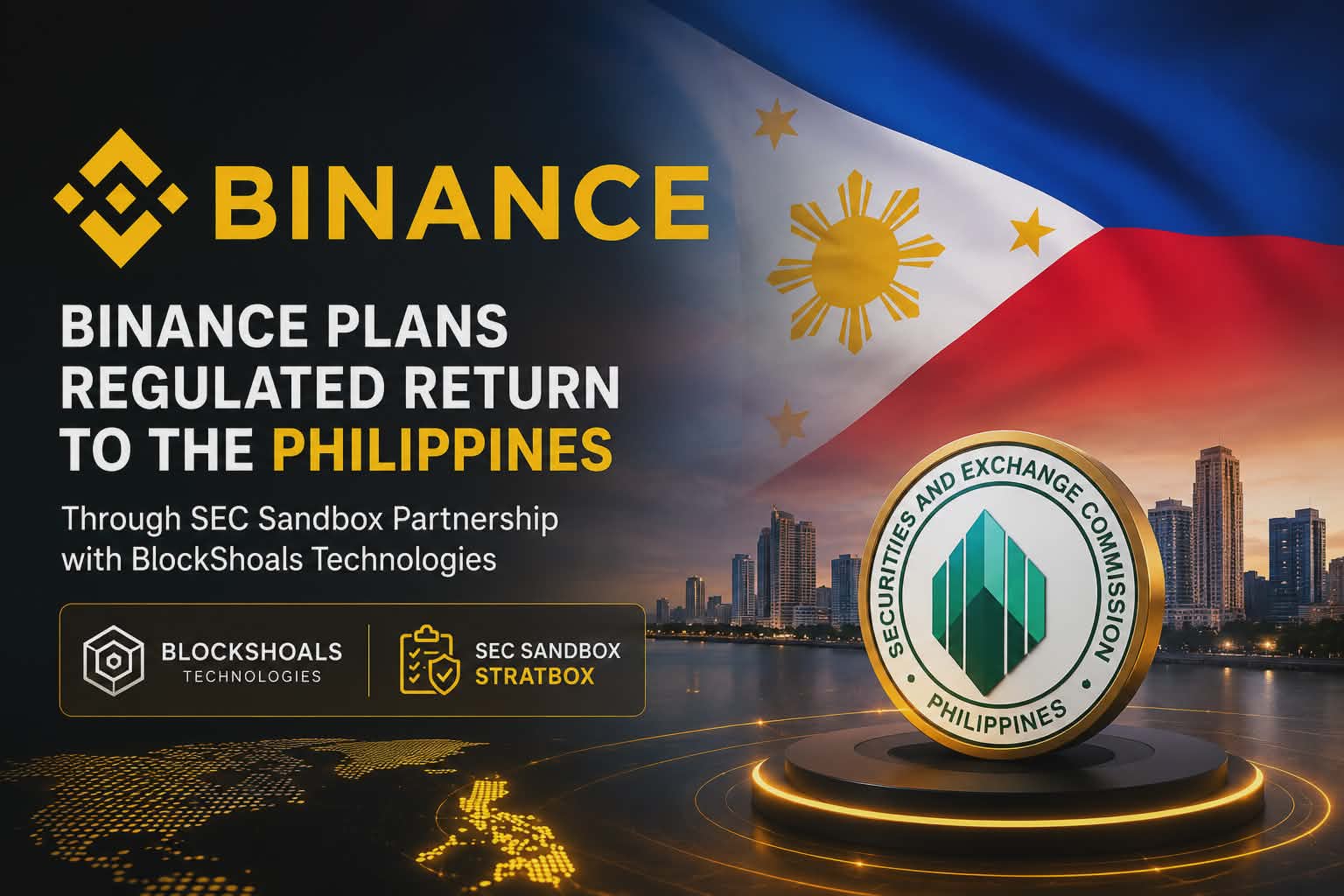
Binance is preparing a regulated return to the Philippine cryptocurrency market through a partnership with local fintech company BlockShoals Technologies. The development marks a major shift in Binance’s strategy after the platform faced regulatory enforcement and access restrictions in the country during 2023 and 2024.
According to reports, Binance plans to re-enter the Philippines under the supervision of the Securities and Exchange Commission (SEC) through its regulatory sandbox framework called StratBox, short for Strategic Sandbox. Rather than operating directly as an offshore exchange, Binance will work through a locally registered entity responsible for compliance and domestic operations.
This approach is widely viewed as Binance’s formal effort to address previous compliance concerns raised by Philippine regulators.
What Is Binance’s New Strategy in the Philippines?
Under the proposed structure, BlockShoals Technologies will act as the approved local intermediary within the SEC sandbox framework.
Binance itself will not directly operate the platform in the Philippines. Instead, the partnership divides responsibilities between Binance and BlockShoals.
Binance is expected to provide:
- Global cryptocurrency exchange infrastructure
- Trading technology and platform systems
- Security and cybersecurity capabilities
- Liquidity and product support
- International compliance expertise
Meanwhile, BlockShoals Technologies will reportedly handle:
- Local operations in the Philippines
- Regulatory compliance requirements
- Coordination with Philippine authorities
- Domestic accountability under SEC supervision
This setup allows the platform to operate within a monitored and locally regulated structure instead of functioning solely as an offshore exchange.
What Is the SEC StratBox Sandbox?
The Strategic Sandbox, commonly called StratBox, is a regulatory framework established by the Philippine SEC under SEC Memorandum Circular No. 9, Series of 2024.
The sandbox allows selected financial technology and digital asset firms to test products and services in a controlled environment while being supervised by regulators.
Reports state that BlockShoals Technologies received in-principle approval from the SEC Commission En Banc in November 2025. The company later reportedly secured a Notice of Approval in April 2026 to operate within the sandbox environment as a Crypto Asset Intermediary.
Live testing under the StratBox framework is expected to begin during the second half of 2026. Under standard sandbox rules, the testing phase is expected to run for at least 24 months.
During this pilot period, the platform will reportedly offer a version specifically configured for Filipino users while remaining under close regulatory monitoring.
A wider public rollout would only become possible after regulators determine that the platform meets local operational, compliance, and consumer protection standards.
Why Was Binance Previously Blocked in the Philippines?
Binance faced major regulatory challenges in the Philippines beginning in late 2023.
The Philippine SEC issued public warnings stating that Binance was allegedly offering unregistered securities and operating in the country without the required licenses. Regulators stated that the platform lacked authorization to solicit investments and provide crypto-related services to Filipino users.
Following these warnings, the National Telecommunications Commission (NTC) later directed local internet service providers to restrict access to Binance’s website and application in the Philippines.
As of now, the platform remains inaccessible locally under those earlier enforcement directives.
How Does the New Sandbox Structure Address the Issue?
The new arrangement is designed to address the earlier compliance concerns by routing operations through a locally supervised entity.
Instead of Binance directly serving Philippine users from overseas, the platform would operate through BlockShoals Technologies under SEC oversight and within the Strategic Sandbox framework.
This structure allows Philippine regulators to monitor operations more closely while giving Binance a potential legal pathway back into the Philippine digital asset market.
What This Means for the Philippine Crypto Industry
Binance’s planned return could become one of the most significant developments in the Philippine cryptocurrency industry in recent years.
The move reflects a growing trend where global crypto exchanges seek partnerships with locally regulated firms rather than operating independently in foreign markets. Governments and financial regulators worldwide continue increasing oversight of digital asset platforms, particularly in areas involving licensing, investor protection, anti-money laundering compliance, and consumer safeguards.
If the StratBox pilot program succeeds, it could become a model for how international cryptocurrency exchanges re-enter regulated markets through locally compliant structures after previous regulatory disputes.
For Filipino cryptocurrency users, the development may eventually restore access to Binance-related services through a framework monitored and approved by Philippine regulators. However, the process remains in its early stages, and live pilot testing is not expected to begin until the latter half of 2026.
Leave a Reply