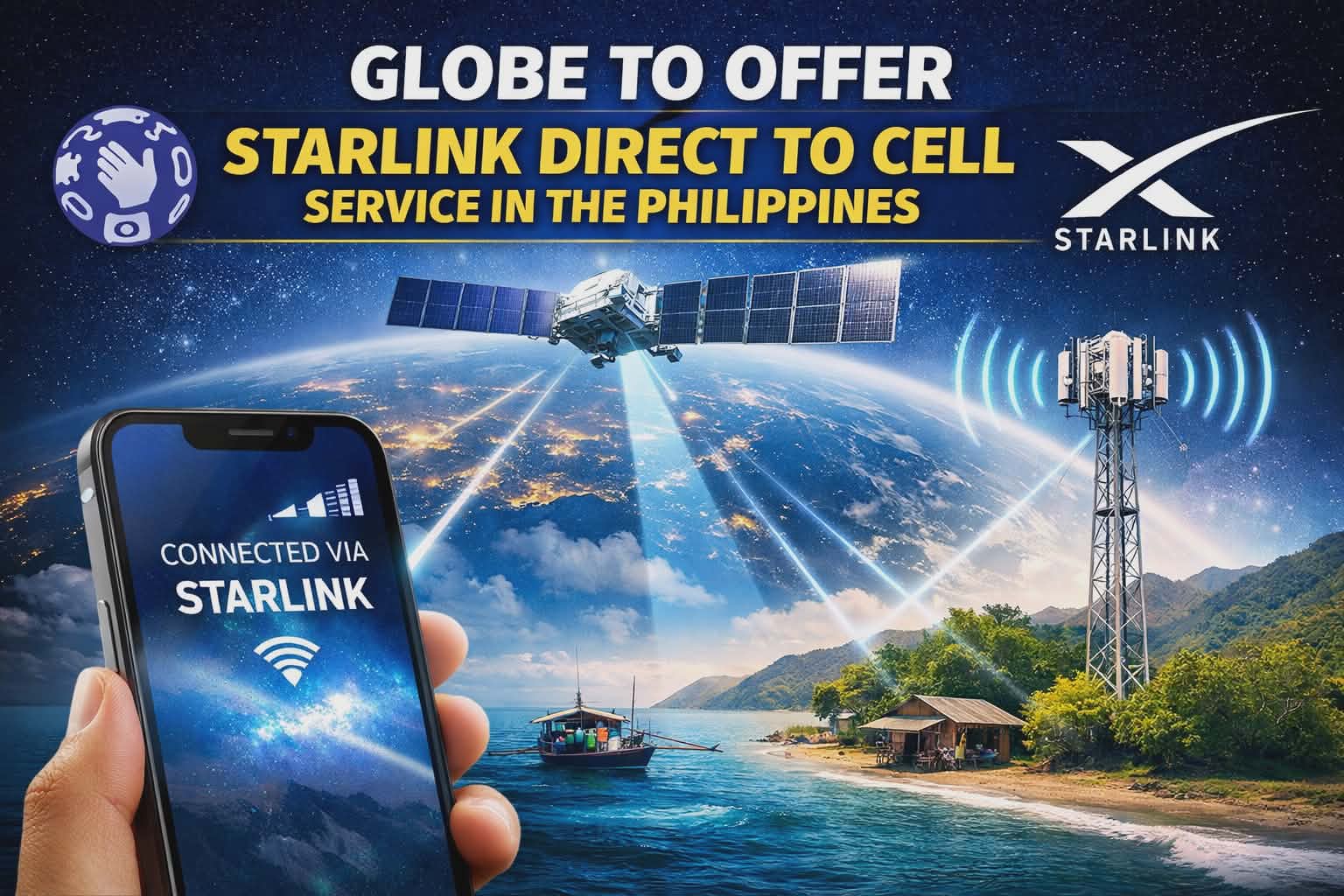
Globe Telecom is set to introduce Starlink’s Direct to Cell (DTC) service in the Philippines, marking a major step forward in expanding mobile connectivity across the country. Once launched, Globe will become the first mobile network operator in the Philippines to bring Starlink’s Direct to Cell technology to market.
What is Starlink Direct to Cell?
Starlink Direct to Cell is a satellite-based mobile service that allows standard LTE smartphones to connect directly to satellites, even in areas with no traditional cell towers. The technology is designed to:
- Address long-standing coverage gaps in geographically isolated and disadvantaged areas.
- Provide connectivity to remote inland communities.
- Extend coverage to coastal waters where traditional infrastructure is limited.
This service aims to deliver a seamless mobile experience even in locations previously considered unreachable by conventional networks.
No Special Equipment Required
Unlike conventional satellite services, Direct to Cell does not require special satellite phones or Starlink dishes. Supported LTE smartphones connect using standard LTE bands and protocols, functioning similarly to roaming on another mobile network. From the user’s perspective, the connection works just like a regular cellular signal, making it simple and accessible.
How It Works
Starlink currently has over 650 satellites equipped with eNodeB modems, effectively acting as floating 4G LTE cell towers in space. The connection process is as follows:
- A phone communicates directly with the satellite.
- The satellite routes data through inter-satellite laser links.
- Traffic is backhauled to ground stations and partner mobile networks, such as Globe.
This setup allows users to access reliable mobile service without relying on terrestrial cell towers.
Key Benefits of Direct to Cell
The Direct to Cell service aims to eventually support essential mobile services including:
- Text messaging
- Voice calls
- Mobile data
- IoT connectivity
This makes the service especially valuable for:
- Emergency communications
- Disaster response
- Maritime use
- Rural connectivity where building traditional infrastructure is difficult or impractical.
Bridging the Digital Divide
By leveraging space-based technology, Globe aims to significantly improve mobile access in underserved regions of the Philippine archipelago. This initiative aligns with broader efforts to bridge the digital divide and ensure more Filipinos stay connected regardless of location.
Looking Ahead
Globe has promised more details regarding service availability, supported devices, pricing, and rollout timelines in the coming months. Once available, this service could transform mobile connectivity for communities that have long struggled with limited access.
Conclusion
The introduction of Starlink’s Direct to Cell technology in the Philippines represents a major leap in mobile communications. By combining satellite and LTE technology, Globe is taking an innovative approach to solve coverage challenges, particularly in remote and difficult-to-reach areas. For Filipinos in underserved regions, this could mean reliable connectivity, access to emergency services, and new opportunities for communication and economic activity.
Leave a Reply