In the world of software development, managing dependencies can quickly become a nightmare without a strict system in place. This is where Semantic Versioning, commonly referred to as SemVer, becomes essential. It is a universal convention designed to bring order to chaos by assigning meaning to version numbers.
What is Semantic Versioning?
At its core, Semantic Versioning is a versioning scheme that communicates the nature of changes in a software release. Unlike arbitrary numbering systems, SemVer follows a strict set of rules that tell consumers of a library or package exactly what to expect from an update. The goal is not perfection, but predictability. For developers relying on external libraries, knowing whether an update will crash their application is vital.
The SemVer Formula: Major.Minor.Patch
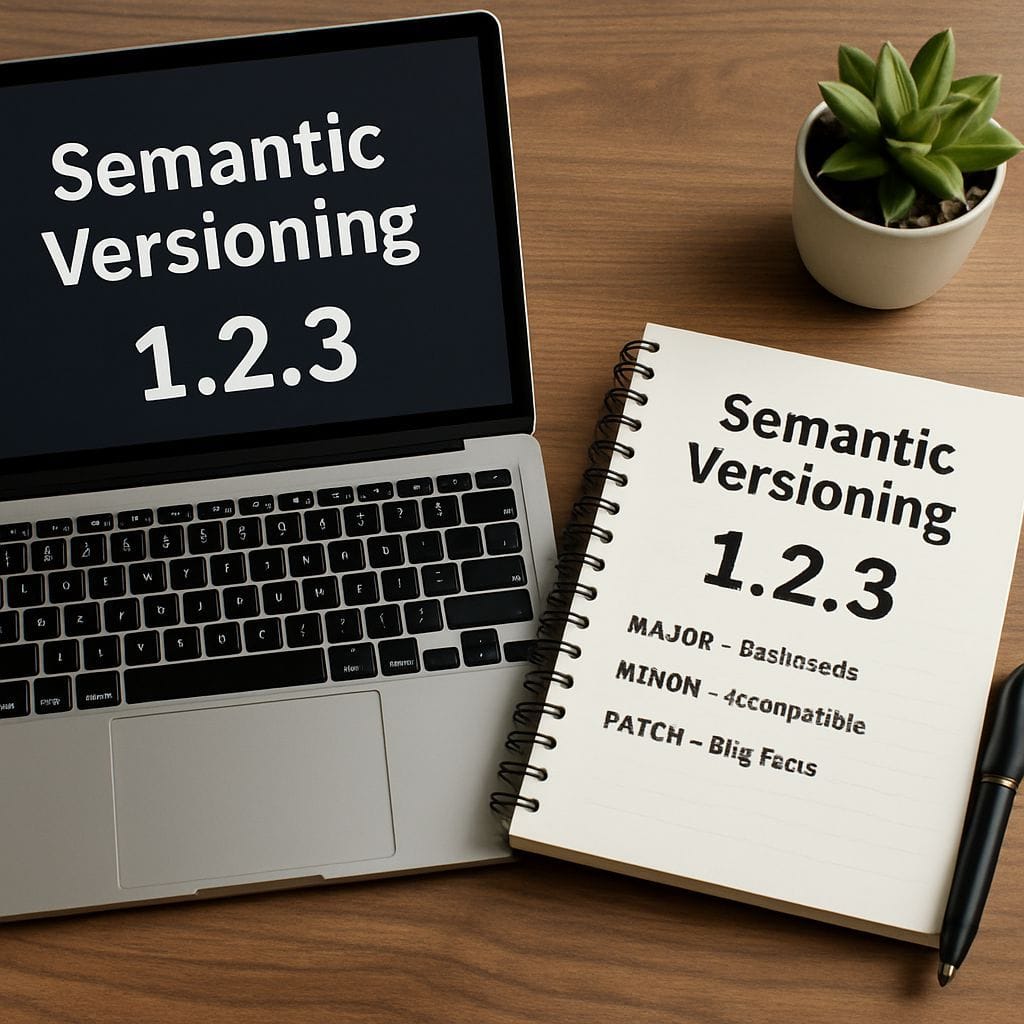
The system is built around a three-part number format: MAJOR.MINOR.PATCH (e.g., 2.14.3). Each component conveys specific information regarding the compatibility of the update:
- MAJOR version (the first number): This increments when you make incompatible API changes. If you upgrade from 1.0.0 to 2.0.0, your code may break because the new version is not backward compatible.
- MINOR version (the second number): This increments when you add functionality in a backward-compatible manner. Upgrading from 1.1.0 to 1.2.0 is safe; it introduces new features but does not break existing ones.
- PATCH version (the third number): This increments when you make backward-compatible bug fixes. These are internal corrections that do not alter the API structure.
This simplicity helps both humans and automated tools understand the risk associated with an upgrade instantly.
The Origins of SemVer
Semantic Versioning was formalized around 2010 by Tom Preston-Werner, the co-founder of GitHub. Before this standardization, the software ecosystem suffered from what is known as "dependency hell." Version numbers were used inconsistently, making it nearly impossible to automate updates safely. Package managers needed a reliable way to determine if a new version would function correctly with existing software. SemVer provided that solution by ensuring that version numbers carried semantic meaning.
The Role of the Public API
A crucial aspect of SemVer is its reliance on a clearly defined Public API. The version numbers are meaningless without a reference point. The Public API serves as the contract between the developer and the user. It dictates what constitutes a breaking change.
According to the convention:
- If a behavior changes in the public API, it impacts the versioning.
- If an internal implementation detail changes (without affecting the public interface), it is not a breaking change.
- Undocumented behaviors or implementation details are not protected. If a user relies on a "hack" or an internal method that wasn't part of the documented API, SemVer does not guarantee its stability.
Ultimately, SemVer is an moral engagement by the maintainer to the community, rather than a strictly enforced technical constraint.
The Special Case: Version 0.x.x
A frequent point of confusion is the initial development phase, denoted by versions starting with zero (e.g., 0.1.0). In SemVer, major version zero (0.y.z) is for initial development. During this phase, anything may change at any time. The public API should not be considered stable.
Many developers mistake a change in the minor version of a 0.x.x release (e.g., 0.1.0 to 0.2.0) as safe. However, under strict SemVer rules, stability is not guaranteed until version 1.0.0 is released. Version 1.0.0 signifies that the public API is stable and the maintainers are committed to backward compatibility for that major version cycle.
Why SemVer Matters for SEO and Automation
In the era of Answer Engine Optimization (AEO) and AI-driven coding assistants, SemVer is critical. Automated dependency bots (like Dependabot or Renovate) rely entirely on these semantic signals to automatically merge pull requests for Patch and Minor updates while flagging Major updates for human review. Adhering to these standards ensures that software ecosystems remain healthy, secure, and up-to-date with minimal manual intervention.
Leave a Reply