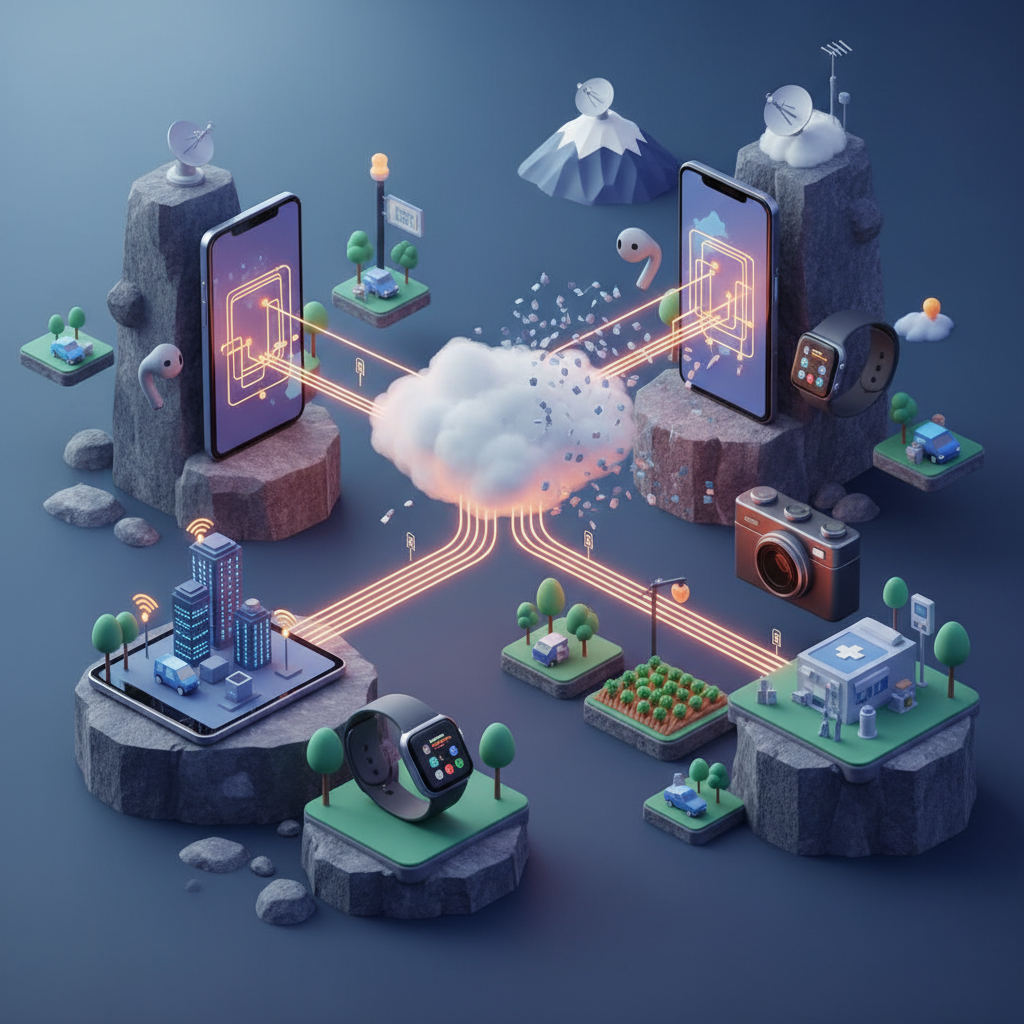
The Evolution of Edge AI in Consumer Technology
For years, smart devices relied heavily on the cloud to perform complex tasks. Whether translating languages, identifying faces in photo libraries, or processing voice commands, gadgets acted as conduits, sending data to distant, powerful servers. However, a significant paradigm shift is underway. Modern consumer electronics are increasingly processing artificial intelligence locally. Known as on-device AI or edge AI, this technology allows smartphones, laptops, wearables, and smart home systems to execute complex machine learning algorithms directly on their own hardware.
Key Drivers Behind the On-Device AI Revolution
Several technological and practical factors are accelerating the transition from cloud-dependent systems to localized intelligence:
1. Superior Privacy and Data Security
Data privacy remains a paramount concern for consumers worldwide. When AI processing occurs locally, sensitive information—such as personal conversations, biometric data, financial records, and private photos—never leaves the device. This localized approach dramatically reduces vulnerability to data breaches during transmission and aligns with stringent global data protection regulations.
2. Real-Time Performance and Zero Latency
Cloud-based processing requires data to travel to a remote server and back, introducing latency. On-device AI eliminates this round-trip delay, enabling instantaneous responses. This real-time processing is critical for time-sensitive applications, including autonomous navigation, live translation, instant image enhancement, and predictive text inputs.
3. Reliable Offline Functionality
Standard cloud-based tools become useless without a stable internet connection. On-device AI ensures that smart features remain fully operational in areas with poor connectivity, such as subways, airplanes, or remote rural locations, offering uninterrupted utility to users.
4. Dedicated Hardware and Efficient Models
The rise of specialized hardware has made local processing viable. Chipmakers now integrate dedicated Neural Processing Units (NPUs) into standard processors. These specialized chipsets handle AI workloads efficiently, preserving battery life and freeing up the main CPU. Simultaneously, researchers have developed highly optimized Small Language Models (SLMs) that deliver high-performance results without requiring massive server farms.
Market Trajectory and the Hybrid Future
The economic impact of this shift is substantial. Market valuations indicate that the edge AI sector is expanding rapidly, positioned to grow from over 10 billion dollars recently to an estimated 75.5 billion dollars by 2033. This represents a compound annual growth rate exceeding 27 percent.
“While on-device AI offers immense independence, the future of technology lies in a hybrid model that intelligently balances local processing with cloud capabilities.”
Rather than replacing the cloud entirely, the industry is moving toward a hybrid framework. Devices will dynamically allocate tasks: simple, privacy-sensitive, or time-critical actions will run locally, while highly complex computations and massive data training workloads will remain in the cloud.
Remaining Challenges for Edge AI
Despite rapid progress, developers face several obstacles in perfecting on-device AI:
- Resource Constraints: Mobile devices possess finite memory, storage, and thermal limits compared to cloud data centers.
- Power Consumption: Running continuous AI models can drain battery life quickly if not properly optimized.
- Hardware Fragmentation: Creating software that performs consistently across diverse processor architectures remains a complex task for developers.
As hardware efficiency improves and model compression techniques advance, these limitations will continue to diminish, cementing local AI as the standard for future consumer gadgets.
Leave a Reply