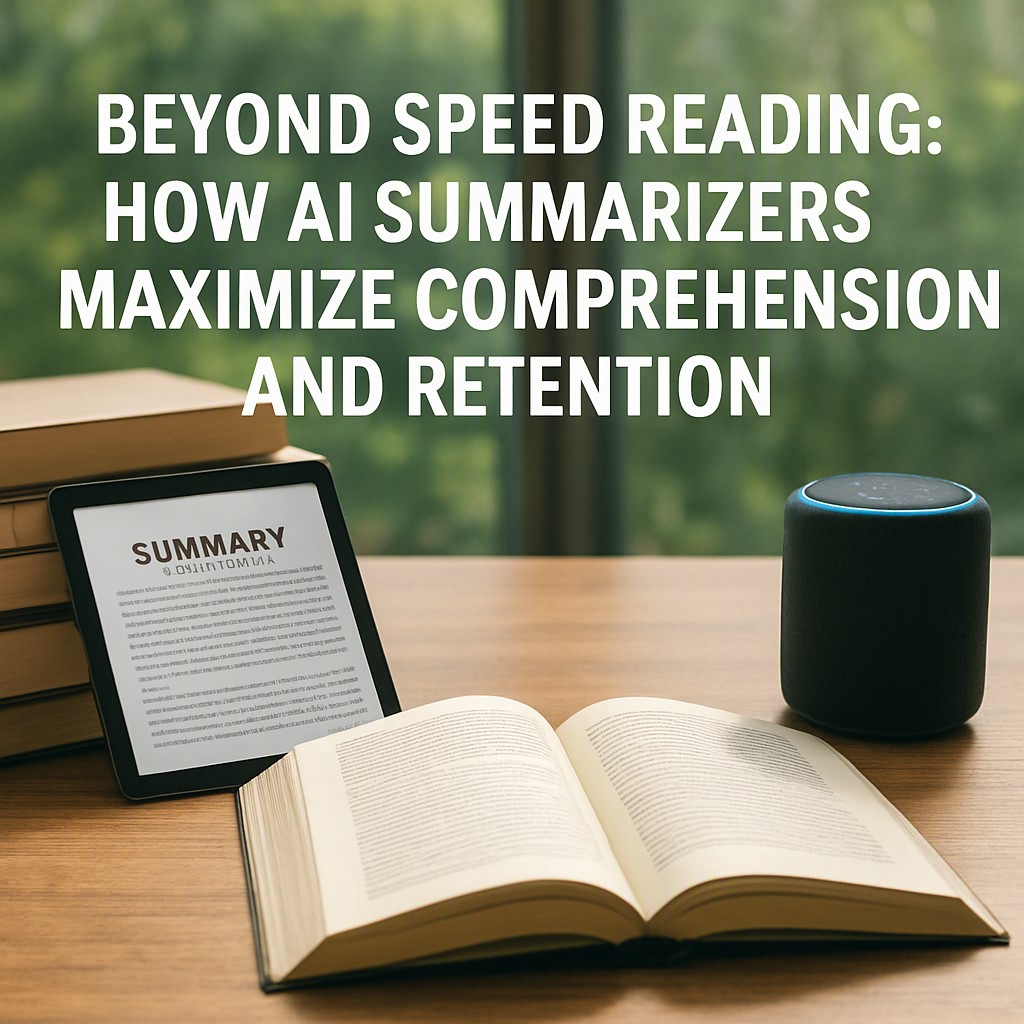
The Evolution of Reading in the Digital Age
In an era characterized by information overload, the challenge for modern readers is no longer finding information, but processing it effectively. Traditional speed-reading techniques often prioritize quantity over quality, leaving readers with little retention of the material. However, the integration of artificial intelligence (AI) into literary analysis has introduced a more sophisticated solution. AI book summarizers, utilizing advanced natural language processing (NLP) and machine learning, are redefining how individuals interact with written content.
Boosting Knowledge Retention and Preventing Cognitive Overload
A primary limitation of rapid reading or basic skimming is the rapid decay of memory. Readers who consume a five-minute summary without deep processing often forget core concepts within days. AI summarizers address this issue by extracting and structuring the most critical arguments and insights. By presenting information in a structured, concise format, these tools help reduce cognitive load, allowing the brain to encode key concepts into long-term memory more efficiently.
Deepening Comprehension Through Structured Insights
Unlike traditional human-written synopses, which may reflect personal biases or miss subtle nuances, high-quality AI tools preserve the logical flow and relationships between ideas. These systems can analyze a text chapter by chapter, demonstrating how arguments build upon one another. This structural clarity helps readers grasp the overarching narrative or framework of a book, ensuring that the author’s original intent and complex ideas are not lost in translation.
Optimizing Academic Study and Professional Research
For students, researchers, and busy professionals, navigating dense textbooks, academic papers, and industry reports can be incredibly time-consuming. AI-driven summarization tools streamline this process by transforming lengthy documents into actionable study guides. Key benefits in this domain include:
- Targeted Review: Highlighting exam-relevant content and primary theses.
- Strategic Filtering: Allowing professionals to evaluate whether a text warrants a full-cover reading before investing hours.
- Synthesized Learning: Merging disparate concepts from multiple summaries to build a cohesive understanding of a topic.
Fostering Critical Thinking and Interactive Engagement
Passive consumption of summaries rarely leads to mastery. Modern AI tools facilitate active learning by offering interactive features. Users can query the AI about specific sections, request clarification on complex terminology, or ask for real-world applications of the book’s concepts. This conversational approach transforms reading from a passive activity into an active dialogue, encouraging critical thinking and deeper intellectual engagement.
“The true value of artificial intelligence in education lies not in doing the thinking for the user, but in prompting the user to think more deeply.”
Strategic Integration: Support, Not Replacement
While AI book summarizers offer powerful advantages, they are most effective when utilized as a supplement to, rather than a replacement for, deep reading. The most successful approach involves using AI summaries to preview material, reinforce key takeaways after reading, or quickly reference complex frameworks during professional projects. By integrating these tools strategically, readers can optimize their learning workflows and achieve genuine intellectual growth.
Leave a Reply